 how-to
7 Ways to Reduce Redness After Microneedling
Last Updated: October 26, 2026
Quick Summary
To reduce microneedling redness, cool the skin with a clean, cool compress for 5 to 10 minutes at a time, cleanse gently with a fragrance-free cleanser, and support the barrier with a soothing hydrating serum and simple moisturizer. Most microneedling redness fades within 24 to 48 hours, though deeper treatments can take up to 3 days.
- Never apply ice directly to freshly treated skin, as it can cause cold burns and rebound redness.
- Avoid exercise, alcohol, hot showers, saunas, and steam for the first 24 hours after treatment.
- Pause retinoids, AHAs, BHAs, vitamin C, and fragrance for at least 3 to 5 days.
- Apply mineral SPF 30 or higher once skin has settled and you are outdoors.
- Redness that spreads or deepens after day 3 warrants a call to your provider or doctor.
Table of Contents
- What Normal Microneedling Redness Looks Like
- Microneedling Redness: How Long It Lasts
- A Step-by-Step Plan to Calm Redness Fast
- Microneedling Aftercare: What to Put on Skin After Microneedling
- Ingredients to Avoid While Your Skin Heals
- Signs of Infection After Microneedling and When to Call
- Redness That Lingers: Your Next Step at S. Corbin Esthetics
- Frequently Asked Questions
What Normal Microneedling Redness Looks Like
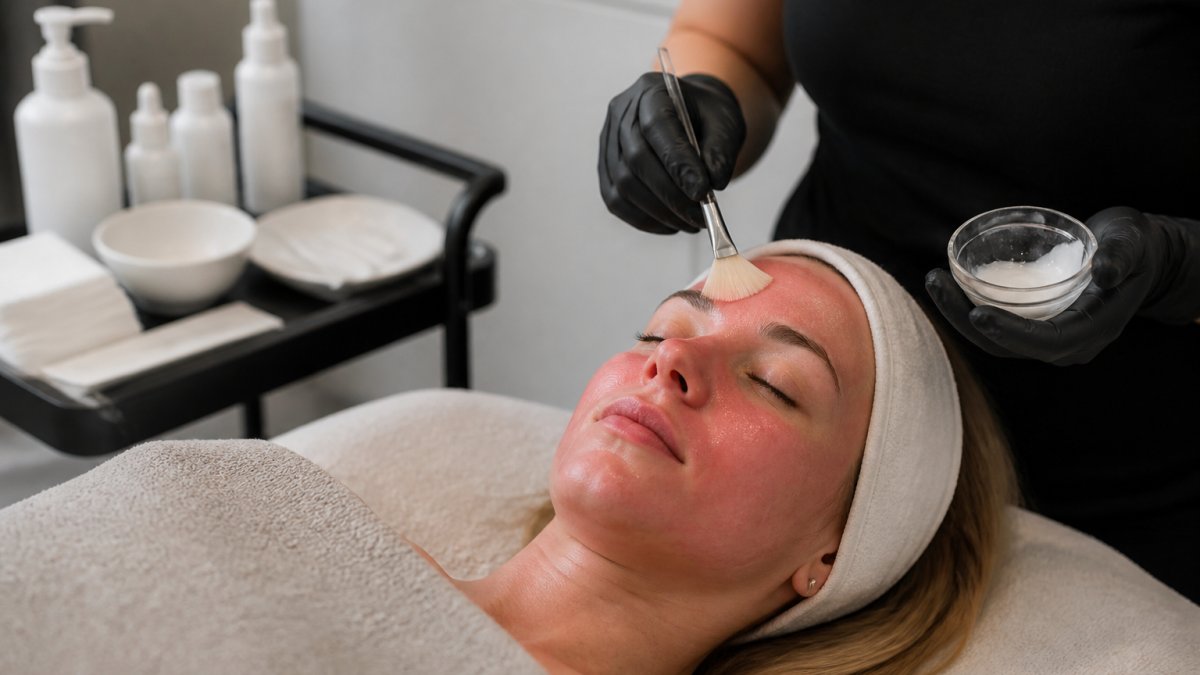
Redness after microneedling is a normal part of the healing process, not a sign that something went wrong. At S. Corbin Esthetics, we tell every client the same thing before treatment: expect pink or red skin, and expect it to fade.
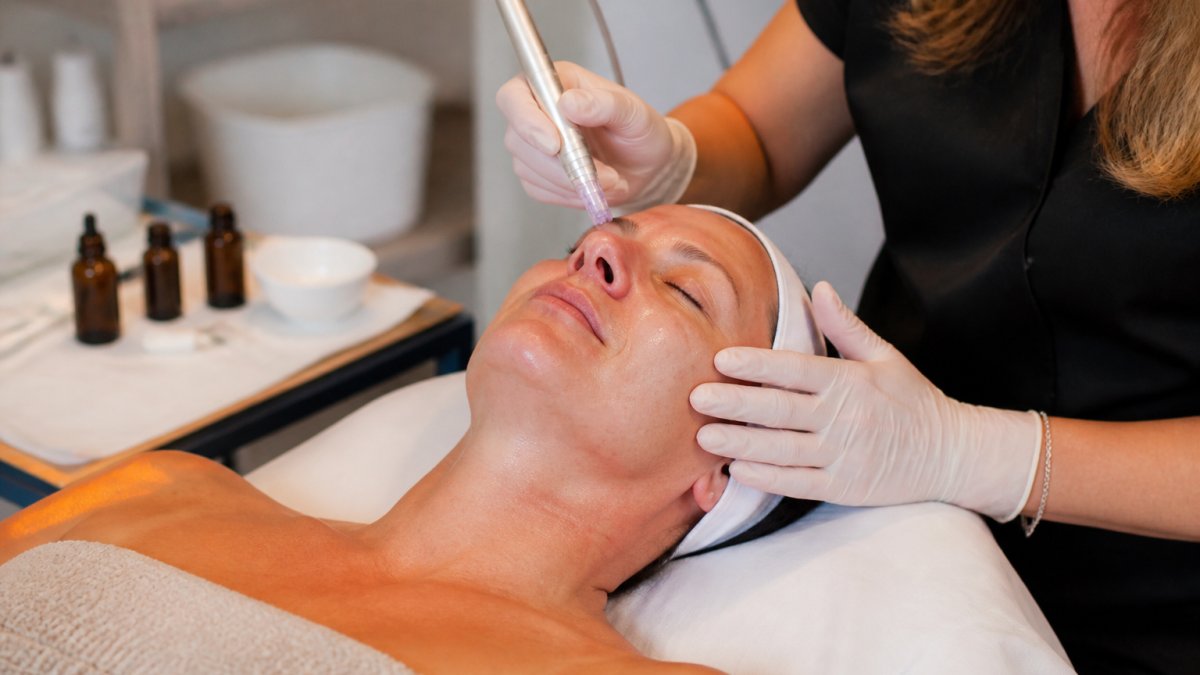
Microneedling redness is the skin's inflammatory response to controlled micro-injuries. The tiny channels trigger blood flow to the treated area, which shows up as flushing, warmth, and mild swelling. A comprehensive review of microneedling in dermatology describes this as expected erythema and edema following the procedure.
What most people picture as "normal" is usually:
- Pink to light red tone across treated areas
- Slight warmth and tightness
- Mild swelling, especially around the cheeks and forehead
- A few pinpoint marks that fade within hours
The intensity depends on treatment depth, device settings, and your skin type. Someone with fair, sensitive skin will typically look redder than someone with a deeper skin tone. Neither is a problem on its own.
Microneedling Redness: How Long It Lasts
Most microneedling redness fades within 24 to 48 hours, though it can last up to 3 days for deeper treatments. Published clinic aftercare instructions note that redness or sensitivity may last up to a few days, with peeling beginning 3 to 5 days after treatment (The Clinic Oregon post-treatment guidance).
Here is a realistic breakdown:
| Timeframe | What You'll Likely See |
|---|---|
| First 24 hours | Bright pink to red, warmth, tightness |
| 1-3 days | Fading pink, mild sensitivity, light flaking |
| 3-5 days | Peeling begins, redness mostly gone |
| 5-7 days | Skin looks settled, glow starts showing |
Deeper treatments and higher device settings push recovery toward the longer end. Lighter sessions often calm down within a day. If you want the bigger picture on when results show up, our guide on how long microneedling results take walks through the full timeline.
A Step-by-Step Plan to Calm Redness Fast
The fastest way to calm microneedling redness is to cool the skin, cleanse gently, and support the barrier with simple hydration, in that order, and on a schedule. Redness is driven by inflammation and increased blood flow to the treated area, so every step below is designed to lower surface temperature and reduce friction without disrupting the micro-channels your skin is closing.
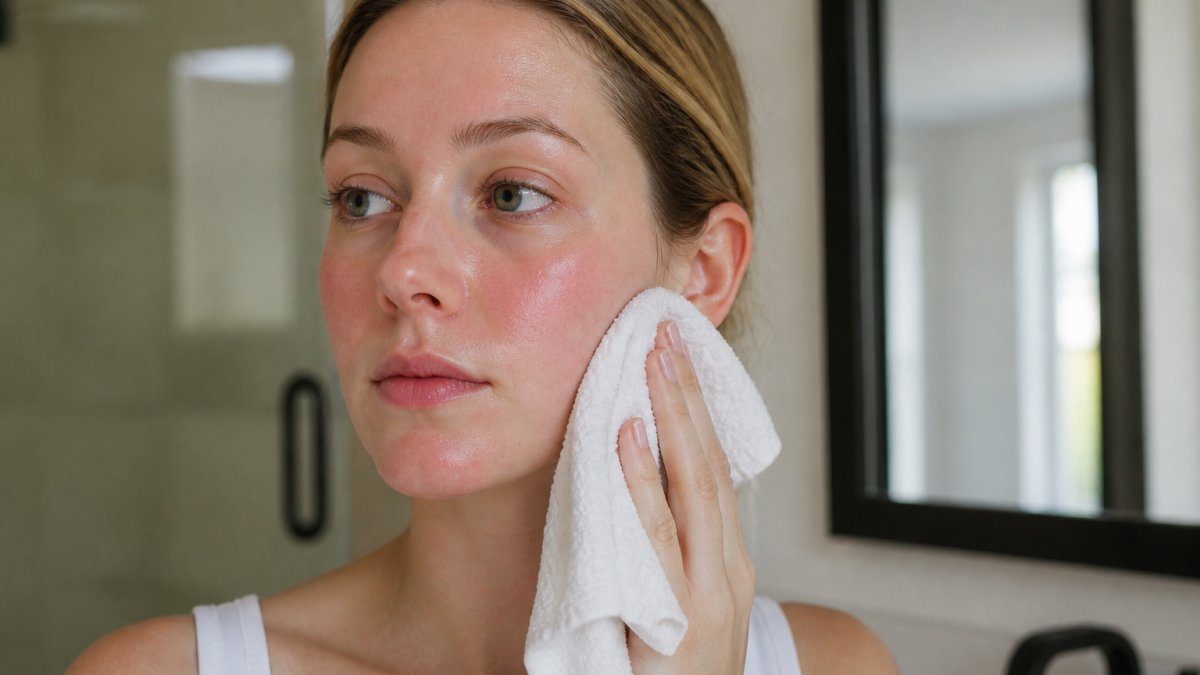
The First 72 Hours: A Timed Redness-Reduction Plan
Most practitioners find that the first three days decide how quickly redness settles. Use this as a general guide, and follow any instructions your provider gives you for your specific treatment.
| Timeframe | What to Do | What to Skip |
|---|---|---|
| First 2-4 hours | Rest with head slightly elevated; apply a cool compress for 5-10 minutes at a time as needed | Ice directly on skin, heat, exercise, alcohol, hot showers |
| Hours 4-24 | Gentle cleanse once in the evening; apply a soothing hydrating serum and a simple moisturizer | Makeup, actives, scrubs, saunas, swimming |
| Day 1-2 | Cleanse morning and night; moisturize; cool compress only if skin feels warm | Retinoids, AHAs/BHAs, vitamin C, fragrance |
| Day 2-3 | Continue gentle cleansing and hydration; add mineral SPF 30+ when outdoors | Picking at flaking skin, restarting actives too early |
| Day 3-5 | Redness should be fading; reintroduce one product at a time | Multiple new products at once |
Step 1: Cool the Skin Safely
Cold compresses are a standard first-line comfort measure for post-procedure redness and swelling. The goal is to lower skin temperature gradually, not to freeze the skin.
- Use a clean, cool, not icy, cloth. Run a soft cloth under cool water, wring it out, and press it gently against the treated areas for 5 to 10 minutes at a time. Repeat every few hours on day one if it feels soothing.
- Never apply ice directly to freshly treated skin. Direct ice can cause cold burns and rebound redness, and the micro-channels make skin more vulnerable than usual. If you want extra cooling, wrap a cool pack in a thin, clean towel and keep sessions short.
- Skip numbing creams, heating pads, hot showers, saunas, and steam for the first 24 hours. Heat increases blood flow and prolongs flushing.
- Avoid exercise and alcohol for 24 hours. Both raise core temperature and can make redness last longer.
Step 2: Cleanse Gently
Use a mild, fragrance-free cleanser with lukewarm water. Pat dry with a clean towel, do not rub. Skip cleansing brushes, washcloths with texture, and anything that exfoliates. One gentle wash in the morning and one at night is enough; over-washing strips the barrier and can make redness look worse.
Step 3: Hydrate and Support the Barrier
Apply a soothing, oil-free hydrating serum followed by a simple moisturizer. Look for hyaluronic acid, glycerin, and ceramides. Keep it boring, your skin does not need ten products right now, and each extra product is another chance for irritation.
Tailor the Plan to Your Treatment and Skin
Recovery is not one-size-fits-all. A light, shallow session often calms within a day, while deeper treatments and higher device settings push redness toward the 3- to 5-day end of the range. Fair, sensitive skin tends to look redder and stay red longer than deeper skin tones, and deeper skin tones need extra attention to pigment changes, which is why gentle handling and sun protection matter even more. If you are unsure where your treatment falls, ask your provider for the needle depth and settings used.
How to Tell Expected Redness From a Warning Sign
Expected redness is pink to light red, warm, and fading day by day. Warning signs are different:
- Redness that spreads or deepens after day 3
- Swelling that gets worse instead of better
- Increasing pain, pus, or fever
- Hives, itching, or a rash that appears suddenly
If you see any of these, stop home care and call your provider or a doctor. Our section below on signs of infection walks through this in more detail.
Microneedling Aftercare: What to Put on Skin After Microneedling
What you put on your skin after microneedling matters more than how often you apply it. Stick to products that calm and hydrate, and skip anything that stings.
Our recommendation for the first 72 hours:
- Hydrating serum: hyaluronic acid or glycerin-based, oil-free
- Moisturizer: fragrance-free, ceramide-rich, gentle
- Sunscreen: mineral SPF 30 or higher once skin has settled
- Lipid support: a barrier balm if skin feels tight
At S. Corbin Esthetics, we pair in-office microneedling with home care built around Corium Corrective 360° and Laskin Skin Systems products, chosen for each client's skin. Your provider should tell you exactly which products to use and when.
Ingredients to Avoid While Your Skin Heals
Pause active ingredients for at least 3 to 5 days after microneedling. Your skin barrier is open, and actives that normally suit you can sting, burn, or trigger irritation.
Avoid these until skin is fully calm:
- Retinoids and retinol
- Exfoliants: AHAs, BHAs, glycolic and salicylic acid
- Vitamin C serums
- Fragrance and essential oils
- Physical scrubs and cleansing brushes
- Makeup for the first 24 hours
A common mistake is restarting retinol too soon because the redness faded. Wait until flaking stops and skin feels normal. If pigmentation is your main concern, our pigmentation-safe AM and PM routine guide shows how to reintroduce actives without undoing your results.
Signs of Infection After Microneedling and When to Call
Signs of infection after microneedling include spreading redness, increasing pain, warmth that worsens after 48 hours, pus, or fever. These are not normal and need medical attention.
A systematic review of microneedling adverse effects found that most reactions are mild and short-lived, but rare complications do occur. Watch for:
- Redness that spreads or deepens after day 3
- Swelling that gets worse, not better
- Bumps filled with pus
- Fever or chills
- Pain that increases instead of easing
If any of these appear, call your provider or a doctor. Do not wait it out.
Redness That Lingers: Your Next Step at S. Corbin Esthetics
Redness that persists beyond a week deserves a professional look. It may point to a reaction, a barrier issue, or a treatment depth that was too aggressive for your skin.
At S. Corbin Esthetics, we customize every microneedling session to your skin type, concerns, and recovery capacity. Our medical director, Dr. Winifred R. King, MD, oversees our protocols. We also offer a virtual skin care program if you want guidance before booking.
Best for: clients who want a personalized recovery plan and ongoing skin health support. Skip if: you have an active infection or open wounds, which need a doctor first.
Frequently Asked Questions
How long does microneedling redness usually last?
Most redness and sensitivity settle within a few days, according to published clinic aftercare instructions, and light peeling often starts 3 to 5 days after treatment. The exact timeline depends on treatment depth, the device used, and your skin type. Superficial sessions may calm within 24 to 48 hours, while deeper treatments can leave visible pink tones for longer. If redness is still spreading or worsening past the window your provider gave you, contact them rather than waiting it out.
What can I put on my skin to reduce redness after microneedling?
Stick to gentle, fragrance-free hydration and barrier support for the first few days. A soothing hydrating serum followed by an oil-free moisturizer helps calm the skin without clogging freshly treated pores. Cold compresses can ease warmth and swelling. Skip retinoids, exfoliants, and acids until your provider clears you.
What are the signs of infection after microneedling?
Watch for redness that spreads instead of fading, warmth that increases after day two, swelling that worsens, pus or yellow crusting, or a fever. Some tenderness and pinkness are expected, but pain that intensifies rather than eases is a warning sign. Contact your provider or a doctor promptly if you notice any of these. A systematic review of microneedling adverse effects confirms infection is possible, which is why clean hands, clean bedding, and strict sun protection matter during recovery.
When can I wear makeup and sunscreen after microneedling?
Most providers ask you to skip makeup for at least 24 hours so the microchannels can close, and some advise waiting longer after deeper treatments. Sunscreen is different: daily SPF 30 or higher is essential once your skin is no longer openly weeping, and you should stay out of direct sun regardless. Mineral sunscreens tend to be gentler on sensitized skin. Confirm the exact timing with your esthetician, since it depends on treatment intensity and how your skin is responding.
Redness after microneedling is manageable when you know what to expect and what to avoid. If your skin stays red longer than it should, or you want a treatment plan built around your recovery, we can help. Get started with S. Corbin Esthetics and book a consultation to map out your microneedling and aftercare plan.