 how-to
How to Treat Sun Damage on Your Face and Fade Dark Spots
Last Updated: October 25, 2026
Quick Summary
To treat sun damage on your face, use broad-spectrum SPF 30 or higher every morning, add vitamin C in the morning and a retinoid at night, and consider in-office treatments like microneedling, peels, or IPL for stubborn pigment. Fading takes weeks, and daily sunscreen is what keeps results from stalling.
- Start a retinoid two to three nights a week, then increase only if tolerated.
- Add one active at a time; starting a retinoid and an acid together causes irritation.
- Darker skin tones need lower-depth or non-ablative settings to limit post-inflammatory hyperpigmentation.
- Reapply broad-spectrum sunscreen every two hours when outdoors.
- Photograph your face in the same light every two weeks to track real change.
Table of Contents
- How to Treat Sun Damage on Your Face: A Step-by-Step Plan
- What Sun Damage Looks Like on Facial Skin
- The Best Skincare Routine for Pigmentation
- How to Fade Sun Spots on Face at Home
- Professional Treatments for Sun Damage
- How to Prevent Sun Damage on Face Every Day
- Building Your Corrective Plan at S. Corbin Esthetics
- Frequently Asked Questions
How to Treat Sun Damage on Your Face: A Step-by-Step Plan
Learning how to treat sun damage on face starts with one honest fact: you can fade much of what you see, but you cannot undo it all. At S. Corbin Esthetics, we tell every client the same thing. Sun damage builds over decades, and a good plan slows it, softens it, and protects what is left.
Here is the practical version. Daily sunscreen, a short actives routine, and the right in-office treatments at the right pace.
Below, we walk through what damage looks like, what you can do at home, and when to bring in a professional.
What Sun Damage Looks Like on Facial Skin
Sun damage on facial skin shows up as dark spots, blotchy patches, fine lines, and a rough texture that makeup cannot hide. Ultraviolet exposure breaks down collagen and elastin over time. That is photoaging, and it is the main reason skin looks older than its years.
Common signs on the face include:
- Hyperpigmentation and dark spots on cheeks and forehead
- Uneven skin tone and blotchy areas
- Age spots that deepen in summer
- Fine lines around the eyes and mouth
- Sagging skin along the jawline
- A dull, leathery texture
Signs That Are Cosmetic vs. Signs That Need a Doctor
Most sun damage is cosmetic. Some is not.
See a doctor for any spot that is new, changing, bleeding, itching, or has an irregular border or mixed colors. The American Academy of Dermatology guidance on skin cancer warning signs is clear that early checks matter. We do not diagnose lesions in the treatment room, and no facial should be booked over a suspicious spot. Get it looked at first.
The Best Skincare Routine for Pigmentation
The best skincare routine for pigmentation is simple, consistent, and boring in the best way. It pairs antioxidant protection in the morning with a repair-and-fade step at night. Skip the ten-step shelf of products. Three to four items done daily beat twelve done twice a month.
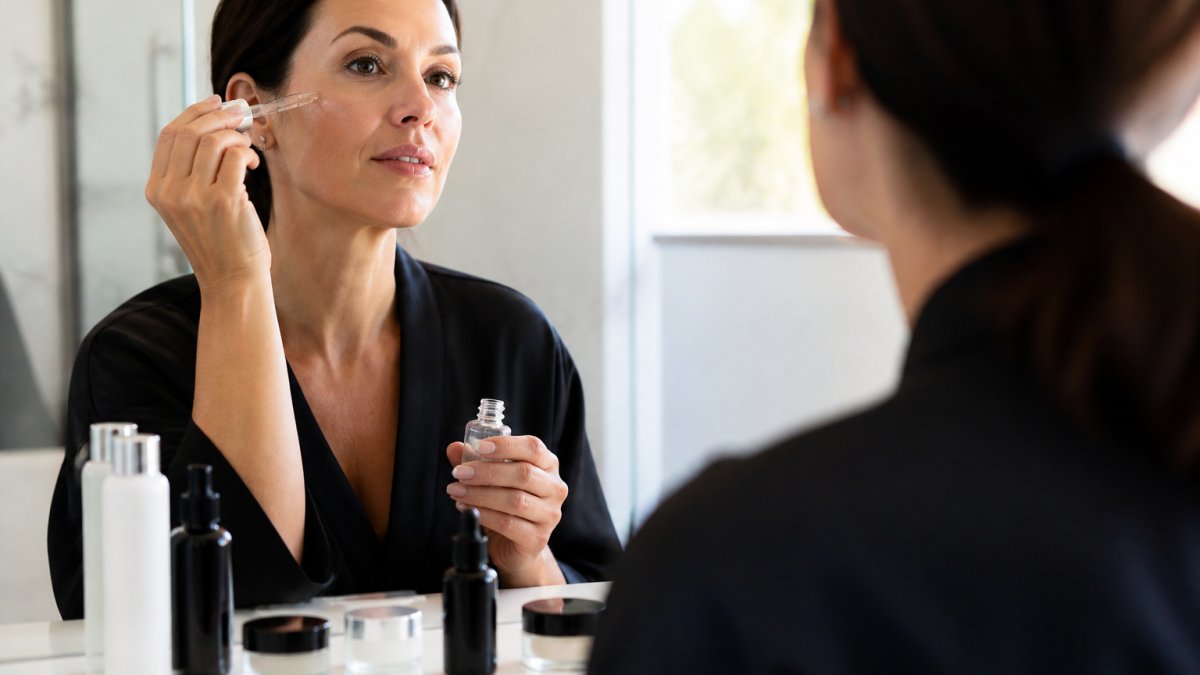
A Simple Morning and Evening Sequence
Morning:
- Gentle cleanser, no scrubbing
- Vitamin C serum on dry skin
- Moisturizer suited to your skin type
- Broad-spectrum sunscreen, SPF 30 or higher, reapplied through the day
Evening:
- Cleanse to remove sunscreen and makeup
- Retinoid, two to three nights a week to start
- Moisturizer to buffer dryness
Watch out: starting a retinoid and an acid in the same week often causes redness and peeling, and most people blame the product instead of the pace. Add one active at a time.
For a fuller walkthrough, see our best skincare routine for pigmentation guide.
How to Fade Sun Spots on Face at Home
Fading sun spots at home is possible, but it takes patience. Expect weeks, not days. The ingredients with the most support are retinoids, vitamin C, and niacinamide. A 2024 review linked through Springer's coverage of skin care strategies for acute sun damage examined a daily serum with sunflower sprout extract for short-term tolerability, though the review did not report the outcome or sample size. That is a fair reminder that "studied" and "proven" are not the same word.
What actually moves the needle at home is not the number of products, it is the sequence and the pace. Here is a practical protocol most practitioners find works for gradual fading without irritation:
Weeks 1-2: Build the base.
- Morning: gentle cleanser, moisturizer, broad-spectrum SPF 30 or higher.
- Evening: cleanser, moisturizer. No actives yet. The goal is a stable barrier.
Weeks 3-4: Add vitamin C.
- Morning: apply vitamin C serum to dry skin before moisturizer and sunscreen.
- Start every other day, then move to daily if tolerated.
Weeks 5-8: Add a retinoid at night.
- Apply a pea-sized amount to dry skin, two nights a week.
- Buffer with moisturizer if dryness appears. Increase to three nights a week after two weeks if tolerated.
Week 9 onward: Add niacinamide if tone is still uneven.
- Niacinamide layers well with vitamin C and retinoids and helps calm redness.
What actually moves the needle at home:
- Sunscreen every single day. Without it, fading stalls.
- Retinoid at night. Start low, go slow.
- Vitamin C in the morning. It supports the skin against daily UV stress.
- Niacinamide. Helps even tone and calm redness.
- Moisturizer. A strong barrier fades marks faster than a stripped one.
The Centers for Disease Control and Prevention sun safety guidance puts prevention first for a reason. Home care cannot outrun daily exposure.
Professional Treatments for Sun Damage
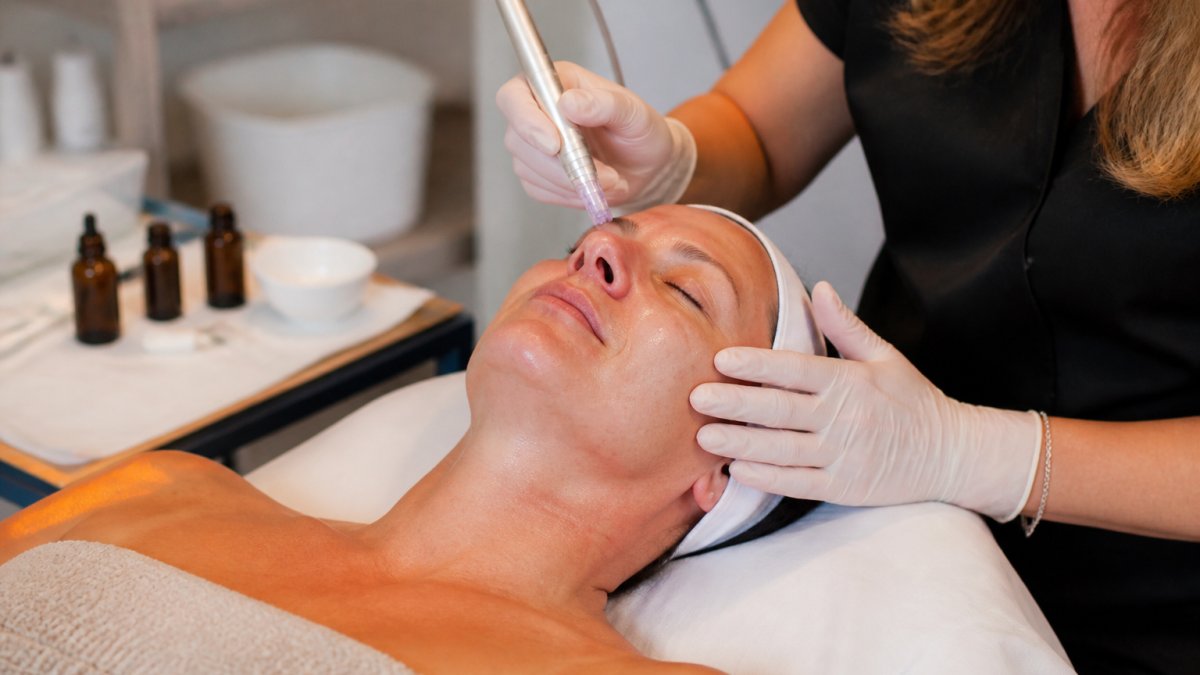
Professional treatments for sun damage go deeper than creams can because they work below the stratum corneum, where pigment and collagen live. In-office options include microneedling, chemical peels, laser resurfacing, intense pulsed light (IPL), and skin tightening. Each works through a different mechanism, and each carries real downtime and real risk.
Here is how they compare on the factors that actually drive your decision:
| Treatment | How It Works | Best For | Typical Sessions | Typical Downtime | Key Cautions |
|---|---|---|---|---|---|
| Microneedling | Controlled micro-injury triggers collagen remodeling | Texture, fine lines, scarring, mild pigment | 3-6, spaced 4-6 weeks | A few days of redness | Avoid on active acne or infection; darker tones need lower depth to limit post-inflammatory hyperpigmentation (PIH) |
| Chemical peel | Acid exfoliates and accelerates cell turnover | Pigmentation, dullness, rough texture | 1-4, spaced 2-4 weeks | Mild flaking for 3-7 days | Strength must match skin tone; medium-depth peels carry PIH risk in darker skin |
| Laser resurfacing (ablative or non-ablative) | Fractional light columns remove damaged tissue and stimulate collagen | Stubborn spots, wrinkles, texture | 1-3, spaced 4-8 weeks | 3-10 days depending on depth | Not for every skin tone; darker skin needs non-ablative or low-fluence settings to avoid PIH |
| Intense pulsed light (IPL) | Broad-spectrum light targets pigment and vascular redness | Diffuse redness and sun-induced pigment | 3-5, spaced 3-4 weeks | Minimal to a few days | Less effective on deep or textured damage; requires strict sun avoidance before and after |
| Skin tightening (radiofrequency, ultrasound) | Heat contracts existing collagen and stimulates new collagen | Mild sagging along the jawline | 1-3, spaced 4-6 weeks | Little to none | Best as maintenance; does not remove pigment |
Choosing Treatments by Skin Tone and Downtime
Darker skin tones carry a higher risk of post-inflammatory hyperpigmentation after heat-based treatments. That is not a reason to skip care. It is a reason to choose carefully and to have a provider who adjusts settings and strength. A common pattern is to favor non-ablative lasers, lower-fluence IPL, and gentle peels over aggressive resurfacing in deeper skin tones, and to pretreat with a pigment-suppressing regimen for two to four weeks before any heat-based procedure.
Ask five questions before booking:
- How much downtime fits my work week?
- Is this safe for my skin tone, and what is your plan to prevent PIH?
- How many sessions, and how far apart?
- What should I stop before treatment (retinoids, acids, photosensitizing medications)?
- What is the aftercare protocol, and who do I call if something goes wrong?
If microneedling is on your list, our microneedling results timeline explains what to expect and when.
How to Prevent Sun Damage on Face Every Day
Preventing sun damage on face is the highest-return habit in skincare. Nothing you buy undoes daily exposure. The U.S. Food and Drug Administration guidance on sunscreen use covers broad-spectrum labels and reapplication, and it is worth reading once.
Daily habits that work:
- Apply broad-spectrum SPF 30 or higher every morning, rain or shine
- Reapply every two hours outdoors
- Wear a hat and seek shade between late morning and afternoon
- Skip tanning beds entirely
- Check your own skin monthly for changes
A 2026 American Academy of Dermatology survey, reported by AIM at Melanoma's summary of the AAD Practice Safe Sun findings, found that 29% of respondents believed tanning is safe if you do not burn. That belief is common and it is costly. There is no safe tan.
Building Your Corrective Plan at S. Corbin Esthetics
A corrective plan should match your skin, your budget, and your calendar. At S. Corbin Esthetics, we build that plan around your actual skin health, not a package menu.
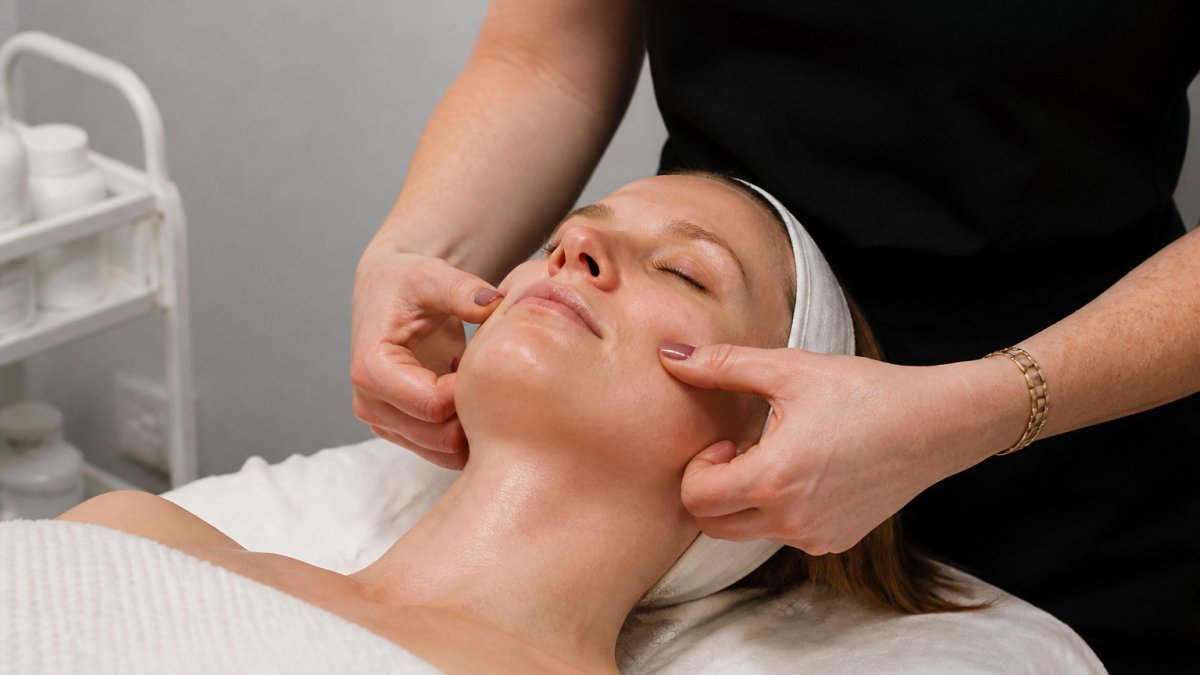
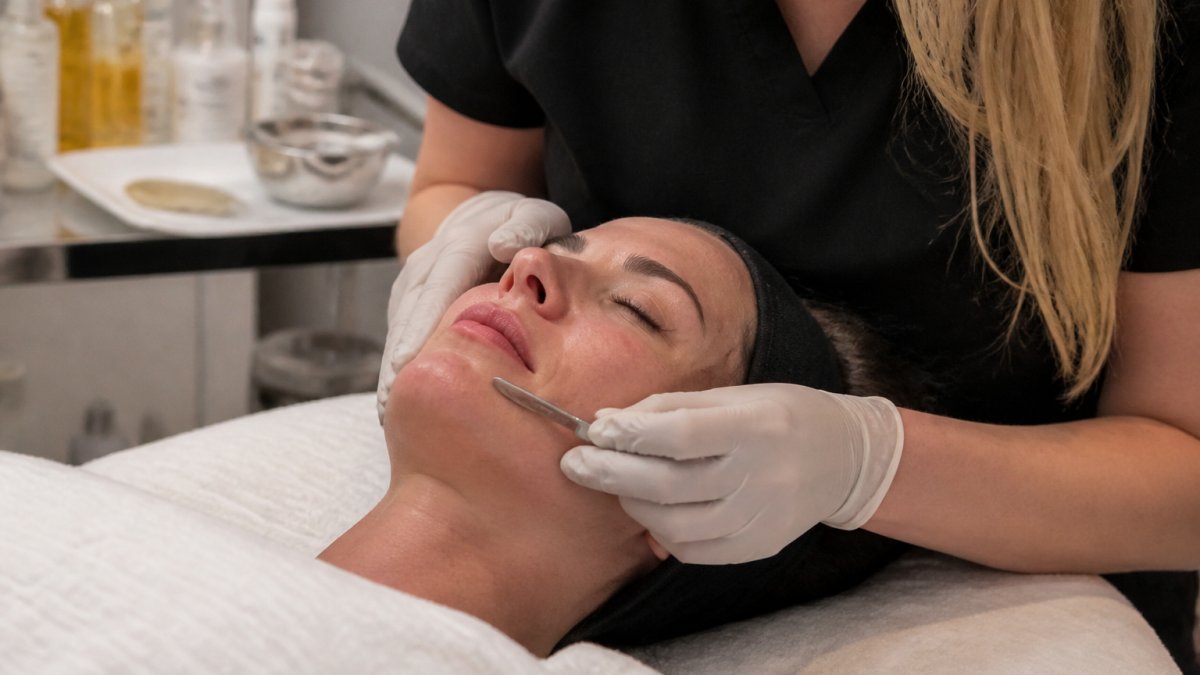
Our approach pairs in-office work with home care you will actually keep up with. We offer customized microneedling, corrective keratolytic peels, dermaplaning, and Neo Lifting facial sculpting massage, plus a virtual skin care program if you cannot come in. Our medical director, Dr. Winifred R. King, MD, oversees our protocols, and we proudly sponsor Corium Corrective 360° Products and Laskin Skin Systems.
What most guides miss is this: the treatment series matters less than what you do between sessions. That is why we build monthly membership options for ongoing skin health.
Frequently Asked Questions
Can sun damage on the face be reversed?
Sun damage can be improved but not fully erased. Topical ingredients and professional treatments for sun damage can fade dark spots, smooth texture, and boost brightness, but they do not undo every change. A 2024 review on acute sun damage strategies notes that outcomes vary and the research does not establish complete reversal. Daily broad-spectrum SPF remains essential to protect your results and prevent further damage.
What cream is good for sun-damaged skin?
Look for a moisturizer with antioxidants plus a separate broad-spectrum SPF. In the best skincare routine for pigmentation, a vitamin C serum in the morning and a retinoid at night are common anchors. Pair them with a barrier-supporting moisturizer. At S. Corbin Esthetics, home care is built around Corium Corrective 360 and Laskin Skin Systems products so your routine matches your in-office plan.
When should I see a dermatologist about a spot on my face?
See a dermatologist promptly for any spot that is new, changing, bleeding, itching, or not healing, or that has irregular borders or mixed colors. These features can signal a lesion that needs medical evaluation, not cosmetic treatment. The American Academy of Dermatology and CDC both advise reducing UV exposure while you seek care. A qualified professional should assess anything suspicious before you start peels, lasers, or microneedling.
How long before I see results from treating sun damage?
Timelines vary by treatment and skin. At-home routines typically need consistent use over weeks to months before fading becomes visible, while professional treatments for sun damage often require a series with recovery time between sessions. Your skin tone, the depth of pigmentation, and how closely you follow sun protection all affect results. A consultation is the best way to set realistic expectations for your skin.
Sun damage will not reverse on its own, and waiting only lets more of it settle in. If you want a plan built for your skin rather than a generic routine, S. Corbin Esthetics can help. You will get customized treatment, a home regimen that fits your life, and guidance from a team that tracks your progress. Get started with S. Corbin Esthetics and build a corrective plan that protects your skin and fades what is already there.