 how-to
How Long for Microneedling Results: A Realistic Timeline
Table of Contents
- How Long for Microneedling Results: The Short Answer
- Your Microneedling Results Timeline, Week by Week
- The Microneedling Healing Process: What Your Skin Is Doing Underneath
- How Many Microneedling Sessions Are Needed for Visible Change?
- Microneedling Aftercare That Protects Your Results
- What Changes Your Timeline: Concern, Depth, and Device
- How to Track Progress Without Guessing
- When to Call a Professional About Your Recovery
- Frequently Asked Questions
Last Updated: October 18, 2026
How Long for Microneedling Results: The Short Answer
Most people see early changes in skin texture within one to two weeks, but the results that matter take longer. If you are asking how long for microneedling results to show up fully, plan on a series of sessions spaced weeks apart, with collagen-driven improvement building over two to six months.
Microneedling results are not a single event. They are a slow build.
Healing vs. Remodeling: Two Timelines Running at Once
Your skin runs two clocks at the same time. The first is recovery: redness, tightness, and surface healing. That clock moves fast, often within days.
Confusing these two timelines is the most common mistake we see. A calm face on day five does not mean the work is done. The real change is still being built underneath.
Your Microneedling Results Timeline, Week by Week
Here is what a typical timeline looks like for a client at our studio. Your own pace will vary with your skin, your concern, and the depth of treatment.
Days 1-3: Redness, Tightness, and the Peak of Downtime
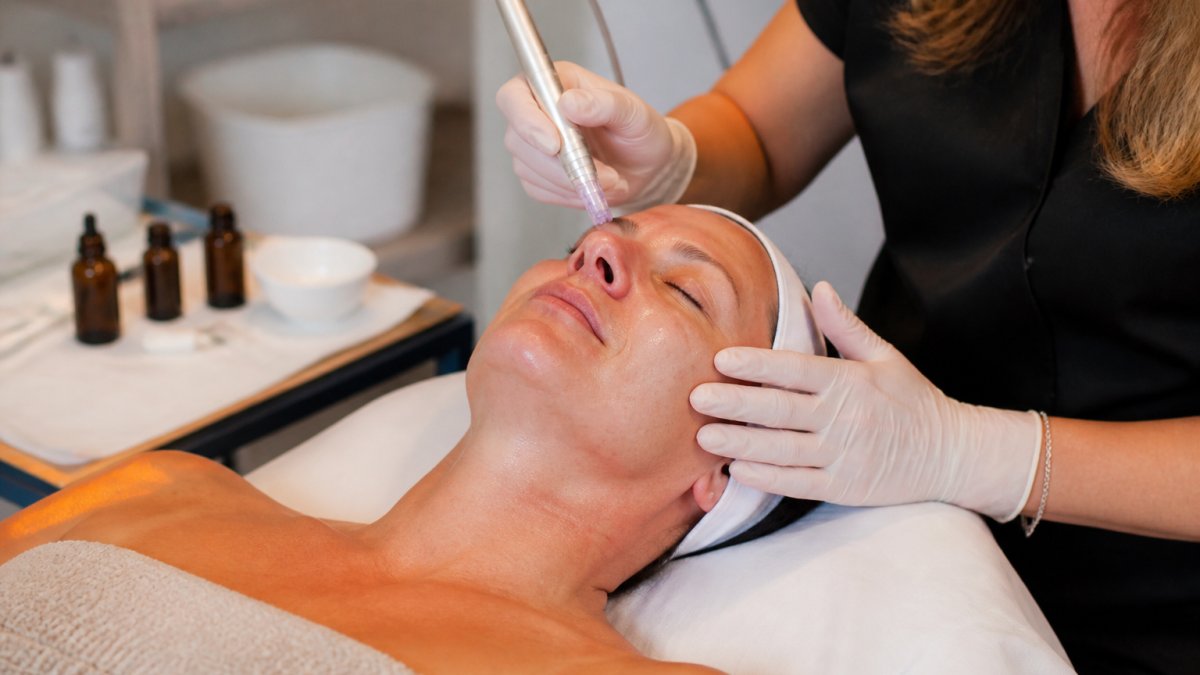
Expect mild redness and a tight, warm feeling for the first day or two. This is normal inflammation, and it is part of how microneedling starts the healing process. Downtime is usually short. Most clients feel presentable within a few days, though makeup and harsh products should wait.
Weeks 1-4: Early Texture Changes and the Collagen Lag
By the end of week one, skin often looks calmer and slightly brighter. This early glow comes from increased blood flow, not new collagen. Real microneedling results from collagen are still weeks away. This is the lag most people do not expect.
Months 2-6: Where Structural Improvement Shows Up
This is where the payoff lives. Over two to six months, collagen production gradually softens fine lines, improves skin tone, and smooths acne scars and texture. Improvement is gradual, so track it with photos rather than memory.
The Microneedling Healing Process: What Your Skin Is Doing Underneath
The microneedling healing process is a controlled repair response. Tiny channels in the skin trigger the body to send in collagen and new cells.
Your job during healing is simple: support it. Keep the skin clean, moisturized, and protected from the sun. Do not pick at flaking skin. Skip strong actives until we clear you to restart them.
How Many Microneedling Sessions Are Needed for Visible Change?
Most people need a series, not a single session. A common approach is three to six treatments spaced about four to six weeks apart, then maintenance sessions a few times a year. The exact number depends on your concern and how your skin responds.
- Fine lines and texture: often a shorter series
- Acne scarring: usually a longer series
- Pigmentation and sun damage: a series plus a home care plan
We map the series to your goals at your consultation, then adjust as your skin responds.
Microneedling Aftercare That Protects Your Results
Good microneedling aftercare protects the work your skin is doing. The first week matters most.
- Clean hands and gentle cleanser only for the first day
- Moisturize to support the healing barrier
- Sun protection every day, no exceptions
- No strong acids, retinoids, or scrubs until cleared
Sun protection is the one step people skip. UV exposure can undo gradual improvement and worsen pigmentation. The American Academy of Dermatology sun protection guidance is a good plain-language reference for daily sunscreen habits.
What Changes Your Timeline: Concern, Depth, and Device
No two timelines match, because several factors shift the clock. The most useful way to set expectations is to separate them: what you are treating, how deep the treatment goes, and which device is used. Each one moves the finish line.
By concern: what tends to respond first and what takes longer
A common pattern practitioners see:
- Dullness and mild texture: Often the earliest visible change, sometimes within the first two to four weeks after a session, because increased circulation and surface turnover show up before new collagen does.
- Fine lines: Gradual softening typically becomes noticeable over two to three months, and it usually takes a series rather than one session to see a clear difference.
- Acne scarring: Usually the slowest category. Scar remodeling depends on sustained collagen deposition, so a longer series (often four to six sessions) and a longer judgment window (three to six months after the series) is typical.
- Pigmentation and sun damage: These often need a series plus consistent daily sun protection. Without sun protection, pigment can rebound and mask any gains.
By depth: more structural change, more recovery
Needle depth is the single biggest lever on both results and downtime. Superficial treatments (roughly the upper layers of skin) mainly affect texture and glow, with redness settling in a day or two. Deeper treatments reach the dermis where collagen remodeling happens, which can drive more meaningful change in scars and lines but typically means two to four days of visible redness and a longer window before structural change is obvious.
By device: standard vs. radiofrequency microneedling
Standard microneedling creates controlled micro-channels. Radiofrequency microneedling adds heat energy at depth, and many practitioners find firming and skin-tightening changes follow a slightly different schedule, sometimes with a bit more post-treatment warmth and swelling. If your goal is texture and scarring, standard microneedling is often the workhorse; if firmness is the priority, RF microneedling may be discussed.
Professional vs. at-home: not the same timeline
At-home rollers and stamps use very short needles and are intended for surface-level support, not for remodeling scars or deeper lines. Professional treatment uses longer, sterile needles and controlled depth, with oversight that at-home tools cannot provide. The trade-off is real: at-home tools carry lower risk of downtime but also far more limited expected change, and improper use can irritate skin or introduce infection.
What does not change the clock
Age, overall skin health, and consistency with aftercare all nudge the timeline, but no product or device compresses collagen remodeling into days. Anyone promising visible scar or line improvement within a week is describing healing, not remodeling.
How to Track Progress Without Guessing
Gradual improvement is easy to miss in the mirror, and memory is a poor judge of slow change. A simple, consistent system turns a vague "I think it's better" into evidence you and your clinician can act on. This is the part most people skip, and it is the difference between guessing and knowing.
Set up comparable photos
- Use the same lighting every time: indirect daylight from a window is more consistent than overhead bathroom light.
- Use the same distance and angle: prop your phone at eye level and stand in the same spot.
- Take photos at the same time of day, before applying products.
- Capture the same views: straight on, plus each side at a slight angle.
Use realistic checkpoints
Instead of checking daily, judge at meaningful intervals:
- Day 3 to 5: recovery check, not results. Confirm redness and tightness are settling.
- Week 2: early surface change. Note brightness and texture, understanding this is largely circulation, not new collagen.
- Week 6 to 8: first honest look at texture and tone trends, especially mid-series.
- Month 3: the checkpoint that matters most for lines, texture, and early scar change.
Keep a short log
A few lines each week is enough: how skin feels, any flaking or breakouts, how well you kept up with sun protection and moisturizing, and anything unusual. Patterns matter more than single days. If you had a rough week of poor sleep or missed sunscreen, note it so a dip does not get misread as treatment failure.
Separate healing from results
Early calm skin is recovery. Real change is what you can still see at the three- and six-month checkpoints compared with your baseline photos. If you only compare this week to last week, you will mistake normal day-to-day variation for progress or setback.
Know when recovery has gone off track
Most recovery is mild and short. Contact your provider if you notice:
- Redness or swelling that worsens after day three or four instead of improving.
- Signs of infection, such as spreading warmth, pus, or fever.
- A reaction that does not settle within a week.
- New or worsening pigment changes, especially in sun-exposed areas.
- Any symptom that worries you; a quick check-in is always better than waiting.
The U.S. Food and Drug Administration guidance on microneedling devices notes that microneedling carries risks when done improperly, which is one reason professional treatment, clear aftercare, and prompt follow-up matter.
At S. Corbin Esthetics, we pair in-office microneedling with a targeted home care plan using Laskin Skin Systems and Corium Corrective 360 products, so healing and results stay on track between visits.
When to Call a Professional About Your Recovery
Most recovery is mild and short. Call your provider if you notice:
- Redness or swelling that gets worse after day three or four
- Signs of infection, such as spreading warmth, pus, or fever
- Prolonged or unusual symptoms that worry you
- A reaction that does not settle within a week
Trust your instincts here. The U.S. Food and Drug Administration guidance on microneedling devices notes that microneedling carries risks when done improperly, which is one reason professional treatment and clear aftercare matter.
At S. Corbin Esthetics, we pair in-office microneedling with a targeted home care plan using Laskin Skin Systems and Corium Corrective 360 products, so healing and results stay on track between visits.
Frequently Asked Questions
How long does it take to see results from microneedling?
Most people notice early changes in skin texture and brightness within one to two weeks after a session, but those are partly hydration and healing effects. The more meaningful structural improvement, such as softened fine lines and faded acne scars, usually appears between four and twelve weeks as collagen production ramps up. A full microneedling results timeline often spans several months, especially when you complete a series of sessions rather than a single treatment.
How many microneedling sessions do I need to see results?
A single session can make skin look fresher, but visible, lasting change usually requires a series. Many providers recommend three to six sessions spaced about four to six weeks apart, depending on your concern and treatment depth. Acne scarring and pigmentation often need more sessions than general texture maintenance. Your clinician will set the number based on your skin and how it responds after the first two treatments.
What should I expect after microneedling on my face?
Right after treatment, expect redness, mild tightness, and a sensation like a light sunburn. These usually fade within two to three days. Some people have minor pinpoint bleeding or flaking in the first week. Avoid harsh actives and sun exposure during this window, and follow the microneedling aftercare plan your provider gives you. If redness or irritation lasts beyond a week, contact your clinician.
How long do microneedling results last?
Results are not permanent. Collagen remodeling can improve skin for months after a session, but the natural aging process continues. Many people schedule maintenance sessions every three to six months to preserve texture and tone. Sun protection and a consistent home care routine, including products from lines like Corium Corrective 360, help extend how long results last between appointments.
The hardest part of microneedling is patience. The healing happens fast, but the collagen-driven change takes months, and that is exactly why a planned series and steady aftercare matter. If you want a timeline built around your skin, S. Corbin Esthetics offers customized microneedling, corrective treatments, and a home care regimen matched to your goals, backed by our medical director, Dr. Winifred R. King, MD. Book your consultation and get a realistic plan for your results.