 blog
Dermaplaning Facial Cost and What to Expect: 2026 Guide
Table of Contents
- Dermaplaning Facial Cost: What Drives the Price
- What to Expect During Dermaplaning, Step by Step
- Dermaplaning Facial Benefits for Skin Texture and Tone
- Dermaplaning Aftercare: The First 48 Hours and Beyond
- How Long Do Dermaplaning Results Last?
- Is Dermaplaning Right for Your Skin? Suitability and Alternatives
- Choosing a Provider: Qualifications and Hygiene Checklist
- Conclusion
- Frequently Asked Questions
Last Updated: October 21, 2026
Dermaplaning Facial Cost: What Drives the Price
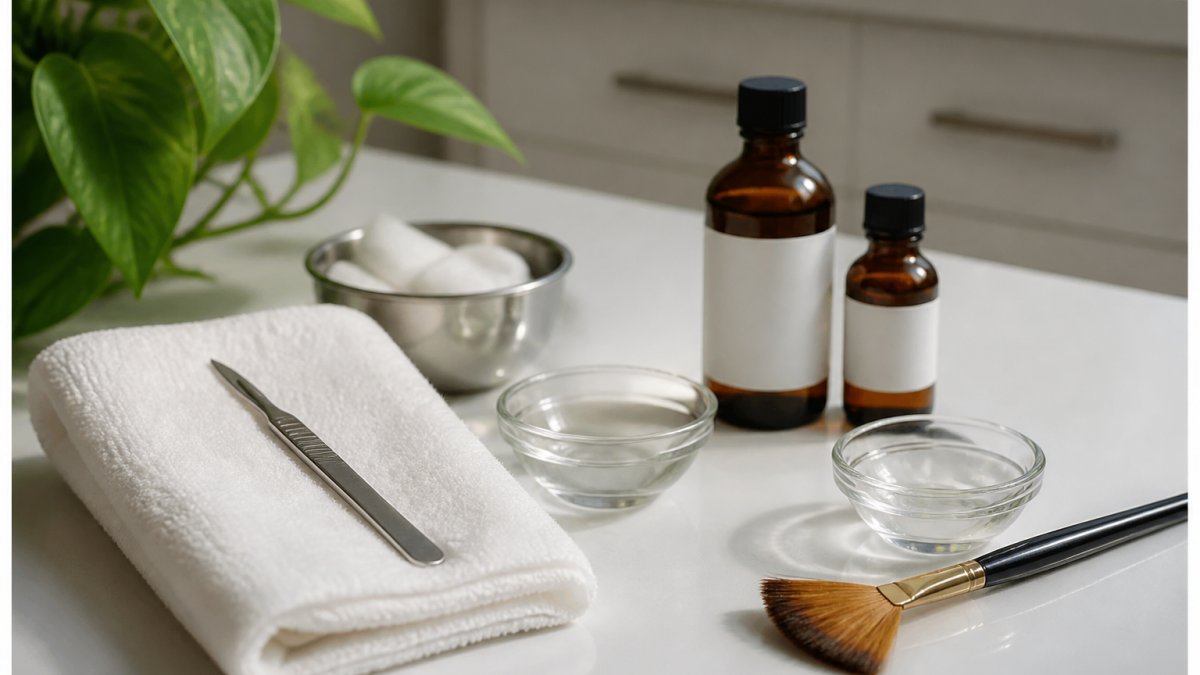
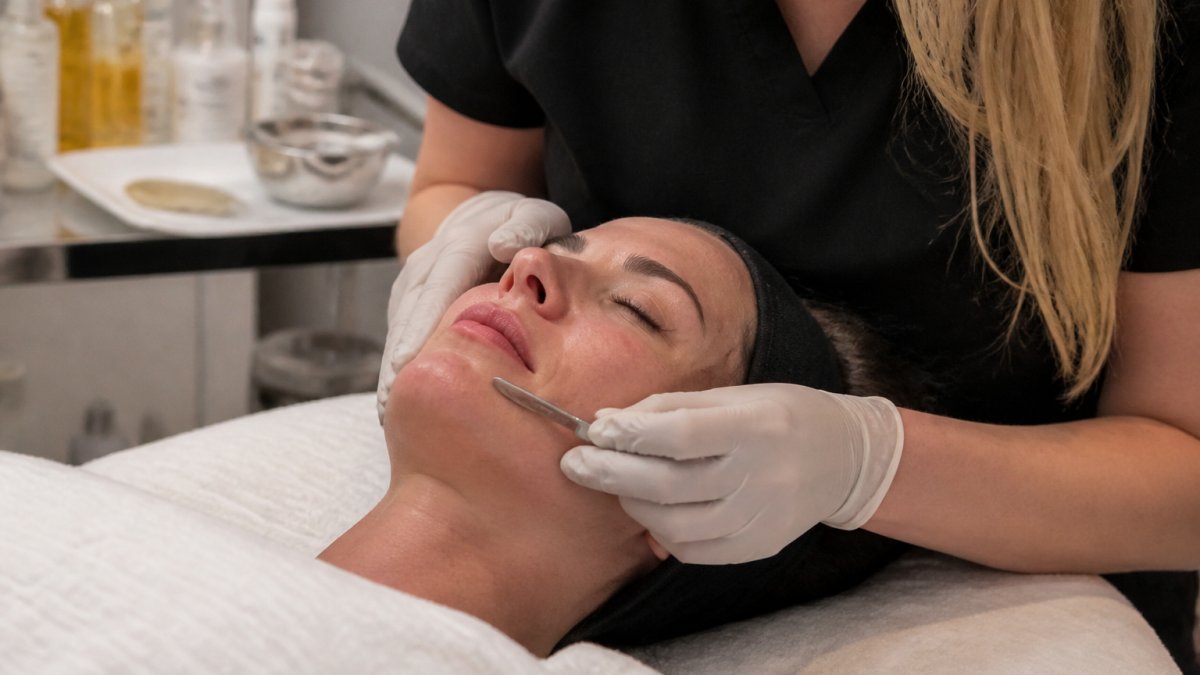
A dermaplaning facial is a physical exfoliation treatment in which a licensed esthetician uses a sterile scalpel blade to gently remove dead skin cells and fine facial hair from the surface of the skin. Corbin Esthetics, we get asked about dermaplaning facial cost more than almost any other question, and the honest answer is that pricing varies by provider, market, and what's included in the appointment.
What we won't do is quote you a number we can't stand behind. Instead, here is the transparent breakdown most guides skip: what the fee actually covers, how standalone and add-on pricing differ, and how to estimate your total annual spend before you book.
What the Fee Actually Covers
A quoted dermaplaning price is rarely just the blade work. A complete appointment typically bundles several components, and comparing a bare add-on price to a full-service price is the most common pricing mistake patients make.
- Consultation and skin analysis. A licensed esthetician reviews your skin, history, and goals before any blade touches your face.
- Double cleanse and prep. Oil and product are removed so the blade glides safely and evenly.
- The dermaplaning pass itself. Sterile single-use blade, angled along the face to lift dead skin cells and vellus hair.
When you compare quotes, ask which of these five components are included. A low add-on price that skips consultation and aftercare is not the same service as a full standalone appointment.
Standalone Versus Add-On Pricing
Dermaplaning is priced two ways, and the difference matters:
- Standalone appointment. Booked on its own, the service carries the full appointment time, consultation, and finishing steps. This is the higher per-visit number but the more complete service.
- Add-on to an existing facial. Tacked onto a facial you're already booking, dermaplaning usually costs less because the cleanse, consultation, and room time are already covered.
A common pattern is for add-on pricing to run meaningfully below standalone pricing at the same studio. If a provider quotes only one number, ask which model it reflects.
Estimating Your Total Annual Spend
Dermaplaning is rarely a one-and-done expense. Most people repeat it every four to six weeks to maintain results, which means the number that matters is your total cost of ongoing treatment, not the single-session price.
To estimate your annual commitment:
- Count your sessions. At a four-week interval, that's roughly 12 to 13 visits a year; at six weeks, roughly 8 to 9.
- Multiply by your per-visit rate. Use the standalone rate if you book dermaplaning on its own, or the add-on rate if it rides along with a regular facial.
- Add finishing and home-care products. Corrective serums, moisturizers, and broad-spectrum sunscreen are part of maintaining results and belong in the budget.
- Ask about membership or package pricing. Monthly membership programs can lower the per-visit cost, but only if you'll actually use them.
We recommend asking for a written breakdown of any membership or package pricing before you commit. A membership that lowers the per-visit rate is only a savings if the visit cadence matches your skin's needs.
Add-Ons That Raise the Total
Common add-ons that increase the appointment total:
- Corrective peels layered with dermaplaning
- LED or hydrating masks
- Home care products to protect the freshly exfoliated skin
Each add-on should be quoted separately so you can see exactly what you're paying for.
Why Published Prices Vary So Much
Three things drive most of the difference between one studio's quote and another's:
- Provider credentials. A licensed esthetician with advanced corrective training charges differently than a spa offering quick add-ons.
- Standalone versus add-on. As above, the same service priced two ways produces two very different numbers.
- What's bundled in. A double cleanse, consultation, and aftercare guidance are not free. Some quotes include them; some don't.
A common mistake is comparing a bare-bones add-on price to a full appointment price. They are not the same service.
What to Expect During Dermaplaning, Step by Step
Here is the itemized walkthrough most guides skip. A professional dermaplaning facial follows a predictable sequence, and knowing it in advance takes the mystery out of the appointment.
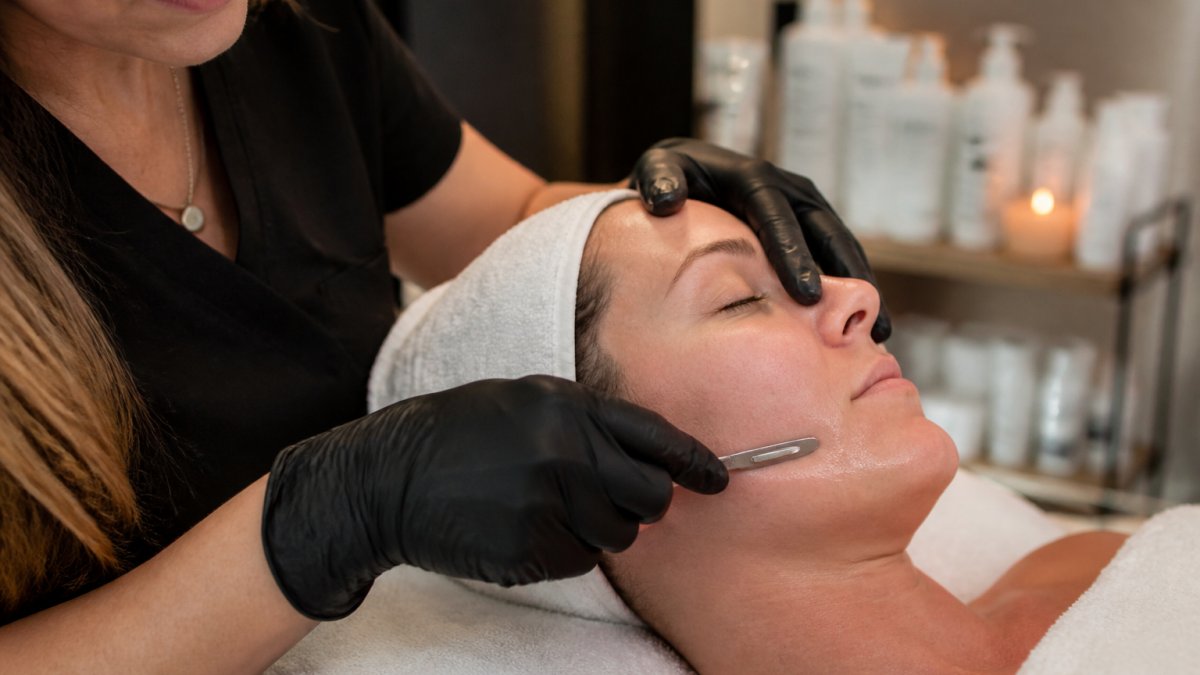
- Consultation. Your esthetician reviews your skin, history, and goals.
- Double cleanse. The skin is cleansed twice to remove oil and product.
- Dermaplaning. A sterile blade is angled along the face to lift dead skin cells and vellus hair, known as peach fuzz.
- Finishing step. A soothing mask, serum, or peel may follow.
- Aftercare instructions. You leave with guidance on sun protection and products.
Treatment Duration and Comfort
A standalone dermaplaning session usually runs about 30 minutes. When it's part of a fuller facial treatment, expect 45 to 60 minutes.
Is it painful? For most people, no. The sensation is often described as a light scratching. Skin sensitivity varies, so tell your esthetician if anything feels uncomfortable. They can adjust pressure or stop.
Dermaplaning Facial Benefits for Skin Texture and Tone
The main dermaplaning facial benefits come down to exfoliation and smoother skin. Removing the outer layer of dead skin cells supports cell turnover, which can leave skin looking brighter and feeling softer. But it helps to separate what the treatment reliably does from what it can't, so you can set realistic expectations before you book.
What Dermaplaning Reliably Does
- Smooths surface texture. The blade lifts the top layer of dead cells, so skin feels softer immediately after the appointment.
- Removes vellus hair (peach fuzz). Fine facial hair is shaved at the surface, which is why makeup sits more evenly afterward.
- Brightens the complexion temporarily. Freshly exfoliated skin reflects light more evenly, which reads as a short-term glow. (Source: American Society of Plastic Surgeons' 2026 statistics on cosmetic procedures)
What Dermaplaning Cannot Do
Dermaplaning is a surface treatment, and it's important to be clear about its limits:
- It does not erase pigmentation or reverse sun damage on its own. Those concerns usually need a corrective plan built around active ingredients and in-office treatments.
- It does not stop hair growth or change hair thickness. Vellus hair grows back on its natural cycle, and the treatment does not alter the follicle.
- It does not treat active acne, scarring, or fine lines at depth. Those require different modalities and a provider assessment.
- Results are temporary. Smoothness and glow fade as skin cells and hair return, typically within three to four weeks.
Setting these expectations up front is part of an honest consultation. We build customized treatments around your actual skin health needs rather than selling the same service to everyone.
How to Protect and Extend the Results
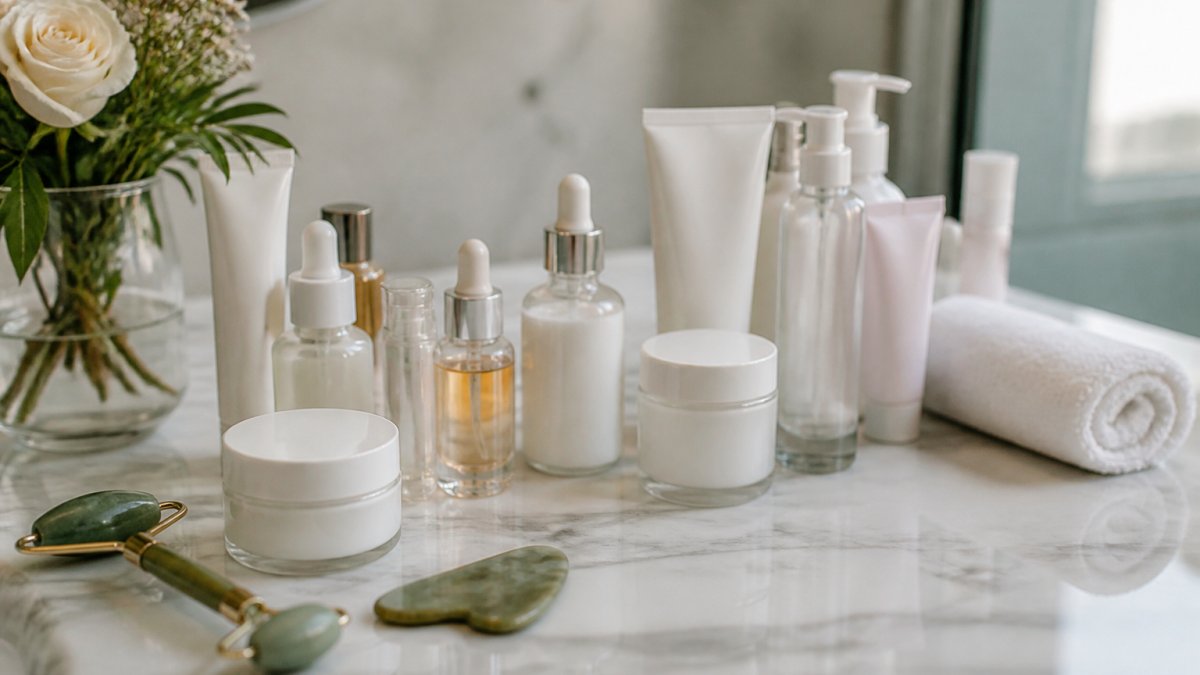
Because dermaplaning leaves skin freshly exfoliated, the products you use afterward determine how long the benefits last. At S. Corbin Esthetics, we pair in-office dermaplaning with a targeted home care regimen built on Laskin Skin Systems and Corium Corrective 360 products, selected for your skin concerns during your consultation.
A simple post-treatment routine:
- Cleanse gently with a non-stripping cleanser for the first 48 hours.
- Moisturize to support the skin barrier while it recovers.
- Apply broad-spectrum sunscreen every day. Newly exfoliated skin burns more easily, and sun exposure undoes the results fastest.
- Hold active acids and retinoids until your esthetician clears you to restart them.
Your esthetician will tell you which Laskin Skin Systems and Corium Corrective 360 products fit your skin and when to reintroduce them after treatment.
Dermaplaning Aftercare: The First 48 Hours and Beyond
Dermaplaning aftercare is simple, but skipping it is where people run into trouble. Freshly exfoliated skin is more sensitive to sun and irritation.
For the first 48 hours:
- Wear broad-spectrum sun protection every day
- Skip harsh scrubs, retinoids, and active acids
- Avoid intense heat, saunas, and heavy workouts that cause sweating
- Moisturize gently and skip makeup if your skin feels tender
Beyond the first two days, maintain results with consistent cleansing, moisturizing, and sun protection. If you use corrective products, ask your esthetician when to restart them.
How Long Do Dermaplaning Results Last?
Results from a single session typically last about three to four weeks. That's because skin cells and fine facial hair grow back on their own natural cycle.
Most people schedule dermaplaning every four to six weeks to keep skin smooth.
If lasting improvement in texture, tone, or fine lines is your goal, dermaplaning works best as one piece of a broader regimen rather than a standalone fix.
Is Dermaplaning Right for Your Skin? Suitability and Alternatives
Dermaplaning suits many skin types, but not all. It's a good fit if you want smoother texture and brighter-looking skin with minimal downtime.
It may not be the best first choice if you have:
- Active acne or inflamed breakouts
- Very reactive or sensitized skin
- A skin condition your provider needs to assess first
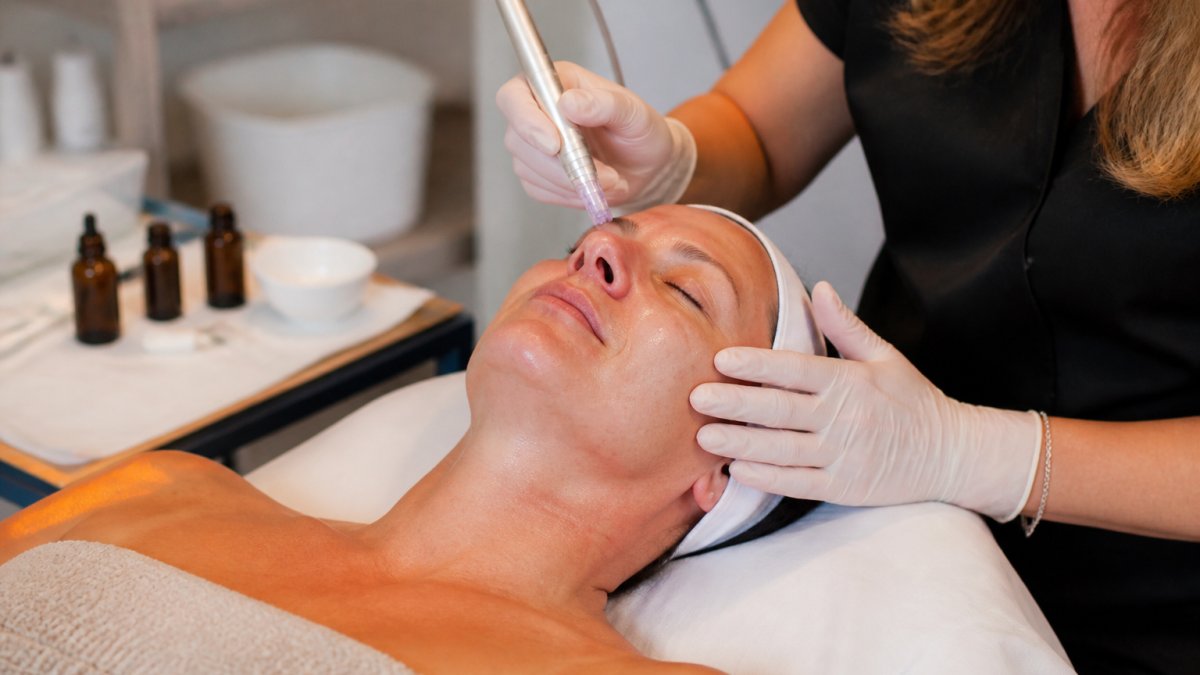
Alternatives include corrective keratolytic peels for pigmentation and texture, microneedling for fine lines and scarring, and Neo Lifting facial sculpting massage for firmness. A skin consultation is the right starting point. At S. Corbin Esthetics, we pair in-office treatments with a targeted home care regimen so results hold up between visits.
| Concern | Dermaplaning | Corrective Peel | Microneedling |
|---|---|---|---|
| Dull texture | Good fit | Good fit | Moderate fit |
| Peach fuzz | Good fit | No | No |
| Pigmentation | Limited alone | Good fit | Good fit |
| Fine lines | Limited alone | Moderate fit | Good fit |
| Downtime | Minimal | Varies by strength | A few days |
Choosing a Provider: Qualifications and Hygiene Checklist
Provider skill and hygiene matter more than a low price. Use this checklist before you book anywhere:
- Is the provider a licensed esthetician?
- Do they offer a consultation before treatment?
- Is a fresh, sterile blade used and discarded per client?
- Are gloves worn and surfaces sanitized?
If a provider can't answer these plainly, keep looking.
Conclusion
Dermaplaning facial cost depends on your provider, your area, and what's bundled into the appointment, so ask for a written breakdown before you book.
At S. Corbin Esthetics, we combine dermaplaning with customized corrective treatments and a targeted home care regimen. Our team offers personalized consultations, advanced corrective services, and monthly membership options to keep your skin healthy between visits.
Frequently Asked Questions
How much does a dermaplaning facial cost?
Pricing for a dermaplaning facial depends on your provider, your area, and whether the treatment is booked alone or as an add-on to another service. Studios set their own rates, so the only reliable figure is the one your provider quotes after a consultation. S. Corbin Esthetics lists current service pricing on its website and confirms the total before you book, so you know what you are paying for the session and any recommended home care.
How long do dermaplaning results last?
Most people see smoother texture and a brighter complexion for roughly two to four weeks. Vellus hair and peach fuzz grow back on their normal cycle, and dead skin cells return to the outer layer of skin over the same period. Monthly sessions keep the effect consistent, which is why many clients pair dermaplaning with a home care routine built around gentle exfoliation and daily sun protection.
What should I avoid after dermaplaning?
For the first 24 to 48 hours, skip harsh exfoliants, retinoids, and any product with strong acids, and avoid intense heat such as saunas, hot yoga, or heavy workouts that leave you sweating. Do not pick at the skin or apply makeup immediately if you can avoid it. Daily broad-spectrum sun protection matters most, because freshly exfoliated skin is more sensitive to UV exposure.
Does dermaplaning make hair grow back thicker or stubbly?
No. Dermaplaning removes fine facial hair at the surface with a sterile blade, and it does not change the follicle underneath, so hair grows back at the same thickness and color. The brief stubble some people notice in the first few days is simply blunt-ended hair emerging, not a change in growth. If you have coarse or dense facial hair, ask your esthetician during a skin consultation about the right approach for your skin type.