 blog
Dermaplaning vs Chemical Peel for Dullness: Key Differences
Table of Contents
- Dermaplaning vs Chemical Peel for Dullness: How They Differ
- How Each Treatment Removes Dead Skin Cells
- Dermaplaning for Dull Skin: Brightness and Peach Fuzz Removal
- Chemical Peel for Dull Skin: Acids, Enzymes, and Cell Turnover
- How Long Does Dermaplaning Last, and How Long Do Peel Results Hold?
- Dermaplaning Before Chemical Peel: Sequence and Safety
- Risks, Skin Tone, and When to Postpone Treatment
- Choosing Your Treatment: A Decision Framework
- Frequently Asked Questions
Last Updated: October 19, 2026
Dermaplaning vs Chemical Peel for Dullness: How They Differ
Dullness comes from dead skin cells sitting on the surface and blocking light. The dermaplaning vs chemical peel question matters because both treatments clear that buildup, but they do it in completely different ways. At S. Corbin Esthetics, we pair both with Laskin Skin Systems and Corium Corrective 360 products.
Dermaplaning shaves the surface. A chemical peel dissolves it. One works on the outside, the other works deeper. That single difference shapes everything: how bright your skin looks, how long it lasts, and who should avoid each one.
Below, we break down both treatments for dull skin, when to combine them, and how to pick the right one for your skin type.
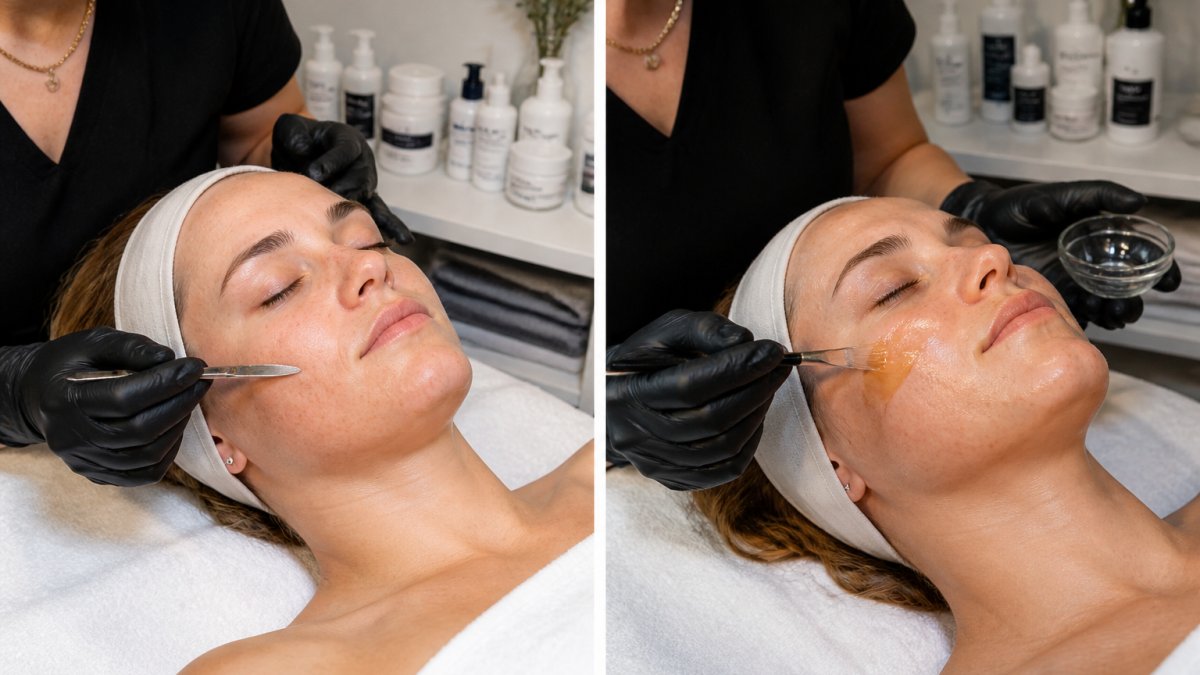
Physical vs Chemical Exfoliation at a Glance
Physical exfoliation removes dead skin cells by mechanical action. Chemical exfoliation loosens the bonds between those cells using acids or enzymes.
Here is how the two compare for dull skin:
| Feature | Dermaplaning | Chemical Peel |
|---|---|---|
| Method | Medical-grade scalpel at a 45-degree angle | Chemical solution applied to skin |
| Depth | Surface exfoliation | Varies by peel strength |
| Best for | Peach fuzz, immediate glow | Texture, tone, deeper renewal |
| Downtime | Usually none | Possible redness and flaking |
| Results last | Weeks | Weeks to months |
The trade-off is simple. Dermaplaning gives instant brightness with almost no recovery. A chemical peel does more underneath but asks for patience.
How Each Treatment Removes Dead Skin Cells
Both treatments clear dead skin cells from the outer skin layers. They just take different routes to get there.
The Scalpel Path: Surface Exfoliation
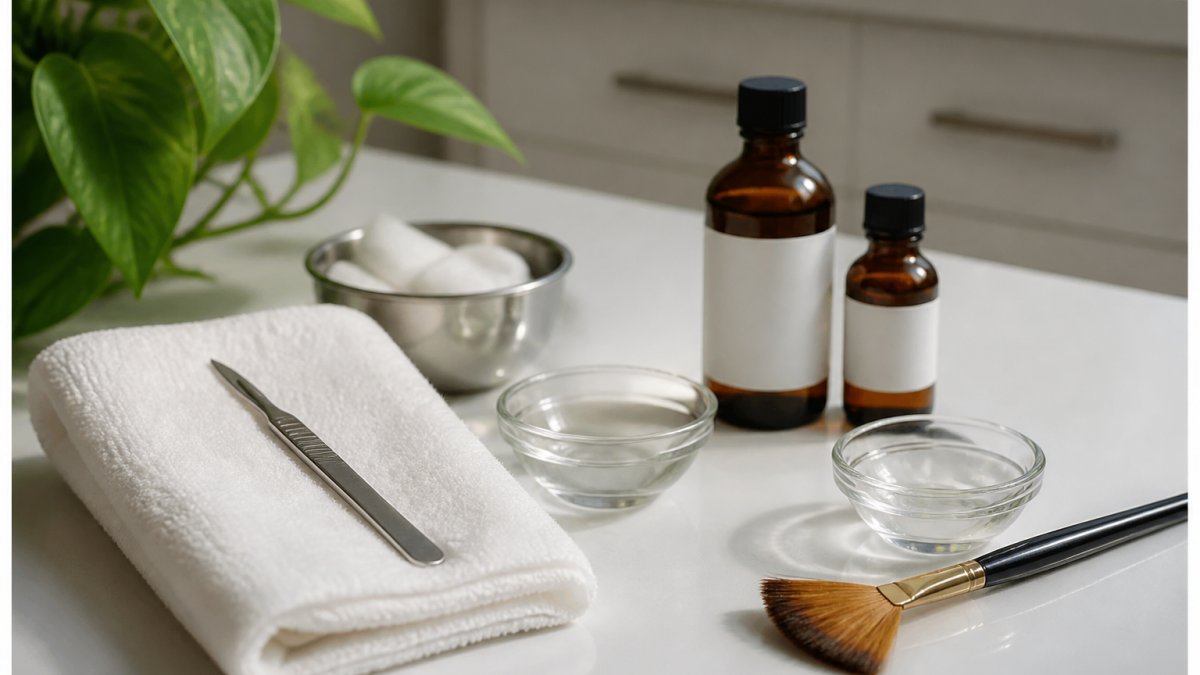
Dermaplaning uses a medical-grade scalpel held at a 45-degree angle. The esthetician glides it across dry skin to shave off dead skin cells and fine vellus hair, often called peach fuzz.
This is pure surface exfoliation. Nothing penetrates below the top layer. The result is smoother skin and a brighter appearance right after the appointment.
The Acid Path: Chemical Penetration
A chemical peel relies on a chemical solution of acids or enzymes. These loosen the glue holding dead cells together, so they shed over the following days.
Peel depth depends on the formula and how long it stays on. Superficial peels touch the outer layers. Stronger peels reach deeper and drive more cell turnover.
Dermaplaning for Dull Skin: Brightness and Peach Fuzz Removal
Dermaplaning wins on speed. It removes the top layer of dead skin cells and peach fuzz in one pass, and the payoff shows up immediately.
That matters for dullness because light reflects better off smooth skin. Vellus hair also traps debris and casts a faint shadow. Removing it makes the face look cleaner and brighter.
What most guides miss: dermaplaning is not just about hair removal. The scalpel also lifts a thin layer of buildup that cleansers leave behind.
Chemical Peel for Dull Skin: Acids, Enzymes, and Cell Turnover
A chemical peel for dull skin works by speeding up cell turnover. Acids and enzymes lift dead cells and push fresh ones to the surface over the following week.
The brightness arrives later than with dermaplaning, but it often runs deeper. Peels can also improve skin texture, soften fine lines, and fade dark spots over a series of sessions.
Our corrective keratolytic peels are customized to your skin type and tolerance. That matters because a peel that is too strong for sensitive skin causes irritation instead of glow.
How Long Does Dermaplaning Last, and How Long Do Peel Results Hold?
How long does dermaplaning last? Most people see smooth, bright skin for about two to four weeks.
Chemical peel results hold longer. Superficial peels show benefits for several weeks, and a series builds on itself.
Neither is permanent. Skin renews itself constantly, so maintenance visits keep dullness from creeping back.
Dermaplaning Before Chemical Peel: Sequence and Safety
Dermaplaning before chemical peel is a common pairing, but the order and the gap between them change both the result and the risk. The reason is mechanical: dermaplaning removes the stratum corneum, the outermost layer of dead cells, so a peel applied to freshly planed skin meets less barrier and penetrates more aggressively. That can mean a more even, more effective peel, or it can mean stinging, blotchiness, and a higher chance of post-inflammatory hyperpigmentation if the skin was not ready.
Why Order Matters
When dermaplaning comes first, the peel solution spreads across smooth, hair-free skin without vellus hair wicking product away or creating uneven contact. Most practitioners find the peel lays down more uniformly, which matters for acids that depend on even dwell time. When the peel comes first, the skin is already in a state of accelerated turnover, and adding a blade on top of peeling skin raises the risk of nicks and over-exfoliation.
Same-Visit vs. Split-Appointment Protocols
There is no single correct schedule. A common pattern is:
- Same visit, dermaplaning first: reserved for resilient skin with no active irritation, no recent retinoid use, and a superficial peel formula. The peel dwell time is usually shortened to account for the reduced barrier.
- Split across one to two weeks: the safer default for sensitive skin, deeper skin tones, or anyone using prescription retinoids. Dermaplaning one week, peel the next, lets the barrier recover before acid contact.
- Peel first, dermaplane later: only after peeling and flaking fully resolve, typically one to two weeks, never on active flaking skin.
Barrier Check Before Combining
Before either treatment in the same visit, we assess for:
- Tightness, stinging, or flaking from recent products
- Active acne, open lesions, or cold sores in the treatment area
- Recent sun exposure or a tan line
- Retinoid, exfoliating acid, or benzoyl peroxide use in the prior week
- A history of cold sores, which may call for antiviral prophylaxis per clinician guidance
If any of these are present, the combination is postponed.
We assess your skin barrier first, then decide whether to combine treatments in one visit or split them across appointments, and we build the home-care plan with Laskin Skin Systems and Corium Corrective 360 products around whichever sequence your skin tolerates.
Risks, Skin Tone, and When to Postpone Treatment
Both treatments carry real risks, and skin tone changes the picture. Post-inflammatory hyperpigmentation is the big one. Deeper skin tones can develop dark patches after irritation, especially from stronger peels.
Dermaplaning risks include redness, minor nicks, and irritation on sensitive skin. Chemical peels can cause flaking, burning, and pigment changes.
Postpone either treatment if you have:
- Active acne or open skin
- A sunburn or recent heavy sun exposure
- A cold sore outbreak near the treatment area
- Recently used prescription retinoids
A consultation sorts out what is safe for your skin before anything touches your face.
Choosing Your Treatment: A Decision Framework
Dullness has different causes, and the right treatment depends on which one is driving yours, plus your skin tone, sensitivity, downtime tolerance, and treatment history. Use the framework below to narrow it down before a consultation.
Step 1: Identify What Is Causing the Dullness
- Surface buildup and peach fuzz: skin looks flat, makeup sits unevenly, and fine hair casts a shadow. Dermaplaning targets this directly and shows results the same day.
- Rough texture and dead-cell compaction: skin feels coarse and light does not reflect evenly. A superficial chemical peel accelerates turnover over the following week.
- Post-acne marks or uneven tone: brown or red spots flatten the overall brightness. A peel series, chosen for your skin tone, is usually the better fit.
- Dehydration and a compromised barrier: skin looks tight and lackluster rather than truly dull. Neither exfoliation is the first step, barrier support comes first.
Step 2: Match to Skin Tone and Pigment Risk
Post-inflammatory hyperpigmentation is the main safety consideration, and deeper skin tones carry more risk after any irritation. For Fitzpatrick types IV-VI, a conservative superficial peel with clinician-selected ingredients and strict sun protection is generally preferred, and dermaplaning is often used for surface brightness. This is a conversation to have with a provider, not a decision to make from a product label.
Step 3: Weigh Downtime and Timing
- Event within a week: dermaplaning, booked about a week out so any minor redness settles.
- No event, willing to flake for a few days: a superficial peel, with brightness building over the following week.
- Cannot risk visible peeling at all: dermaplaning or a very mild peel, staged well before any commitment.
Step 4: Check Treatment History and Medications
Recent prescription retinoids, exfoliating acids, benzoyl peroxide, or isotretinoin use change what is safe. So does a history of cold sores, active acne, or recent sun exposure. Bring your current routine and medication list to the consultation, it is the fastest way to rule out a treatment that would irritate rather than brighten.
Step 5: Ask These Consultation Questions
- Which cause of dullness do you see in my skin, and which treatment addresses it?
- What is my Fitzpatrick type, and what does that mean for my pigmentation risk?
- How many sessions before I see a change, and how often will I need maintenance?
- What should I pause in my home routine before and after?
- If we combine treatments, what is the sequence and the gap between them?
Quick Reference
| Your situation | Likely first choice |
|---|---|
| Dullness plus peach fuzz | Dermaplaning |
| Dullness plus dark spots or rough texture | Chemical peel series |
| Sensitive skin or compromised barrier | Barrier support first |
| Deeper skin tone | Consultation first; conservative superficial peel or dermaplaning |
| Wants both | Staged plan |
At S. Corbin Esthetics, we build a plan around your skin, then support it with Laskin Skin Systems and Corium Corrective 360 home care. Daily sun protection keeps results from fading, a point the Skin Cancer Foundation stresses for all skin types. The American Academy of Dermatology also notes that professional exfoliation should match your skin's tolerance, not a trend.
Frequently Asked Questions
Is dermaplaning or a chemical peel better for dull skin?
It depends on what is making your skin look dull. Dermaplaning removes peach fuzz and the top layer of dead skin cells instantly, so brightness shows up the same day. A chemical peel works deeper with acids or enzymes to speed cell turnover, which helps with dullness tied to pigmentation and texture over several weeks. Many people combine them in a sequenced plan. A consultation can confirm which approach fits your skin type and concerns.
Do you dermaplane before a chemical peel?
Usually not in the same session. Dermaplaning removes the outer skin layers, and applying a chemical solution right after can increase penetration and irritation. Most providers space the two treatments apart. Your esthetician will set the order and timing based on your peel depth, skin type, and treatment tolerance. Never stack both at home.
How long does dermaplaning last?
The smooth, bright finish from dermaplaning typically lasts about three to four weeks, since vellus hair and surface cells return on their own cycle. Some people notice peach fuzz sooner. Monthly sessions keep the effect consistent. Results vary with skin type and home care.
Can dermaplaning and a chemical peel be done in the same appointment?
Some providers offer a combined facial, but it is not a universal option. Layering physical exfoliation with a chemical solution can raise the risk of redness, irritation, and post-inflammatory hyperpigmentation. A provider may use a very superficial peel with light dermaplaning, or space them apart. Ask about sequence, peel depth, and aftercare before booking.
Dullness rarely has one fix. It takes the right treatment, the right timing, and home care that protects your skin barrier between visits. S. Corbin Esthetics offers customized dermaplaning, corrective keratolytic peels, and a home regimen built around Laskin Skin Systems and Corium Corrective 360. Book your consultation and we will map out a plan that fits your skin.